
What to document at move-out
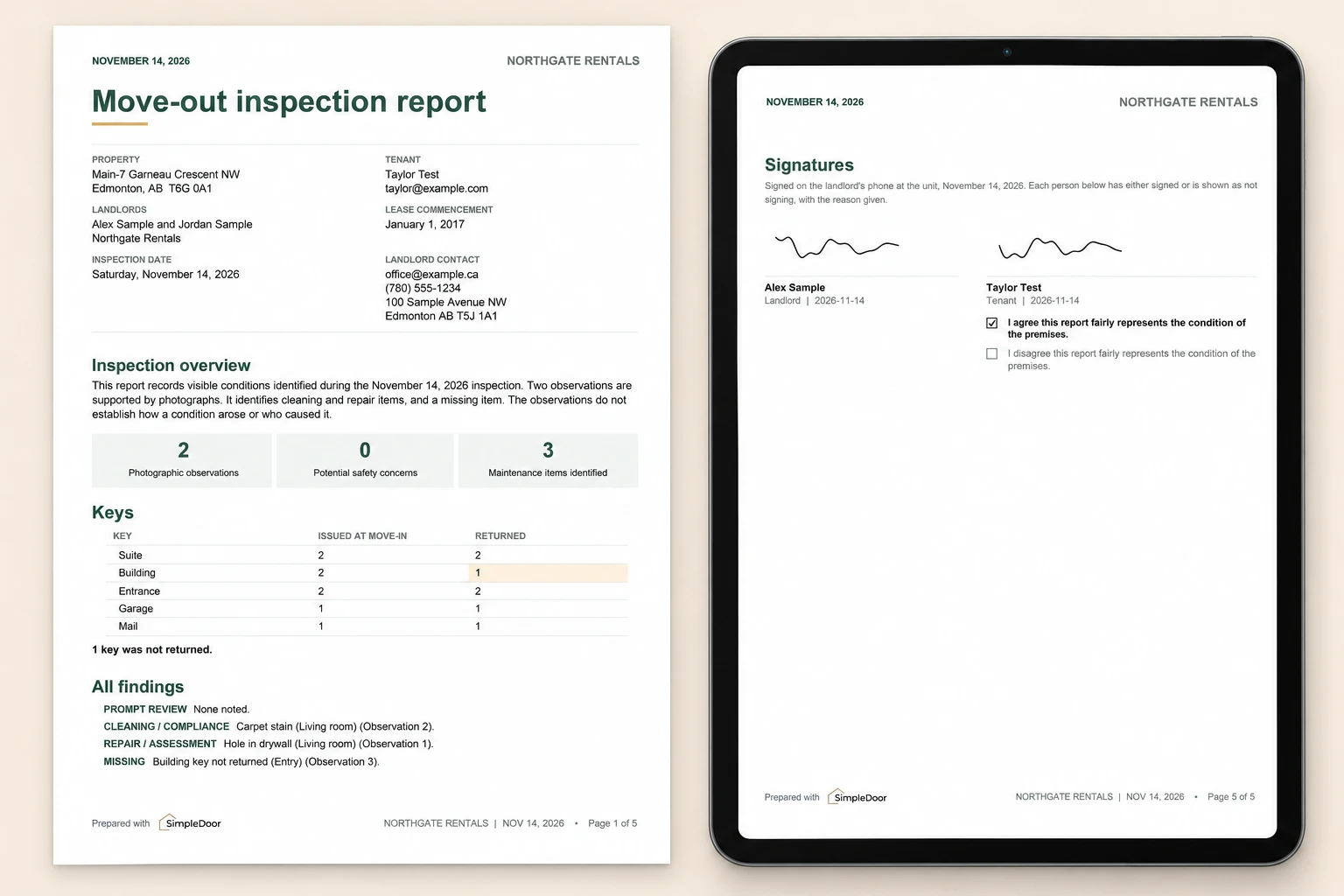
A clear move-out file should let someone who was not at the property understand what changed, what was returned and what happened next.
Keep the condition record, payment record and follow-up work connected, but give each its own explanation. A photo shows a condition; it does not explain a charge by itself.
Start with the move-in record
Bring the earlier inspection, relevant photos and supplied-item list. Compare the same rooms and items rather than creating a completely different list at move-out.
Use our Alberta inspection checklist for the walkthrough and links to the province's report requirements. This article focuses on organising the supporting file.
Record the condition before repairs change it
For each issue, write down the room, item and observable condition. Keep enough context to identify the location later.
| Record | Useful detail |
|---|---|
| Room overview | Shows where the item sits within the rental |
| Close-up photo | Shows the specific mark, break, missing part or cleaning issue |
| Written finding | Describes the issue in plain language, including location |
| Earlier condition | Links the item to the move-in record or later maintenance history |
| Follow-up | Identifies any assessment, cleaning or repair still needed |
For example, “Bathroom, vanity cupboard: water staining on base panel beneath drain; area photographed” is more informative than “bathroom damage”. It records what was seen without assuming a cause that has not been established.
Count access items and supplied contents
Compare returned keys, fobs and remotes with the issue record. Identify an item separately if it belongs to a mailbox, garage, building entrance or storage space.
Record what came back, what did not, and any explanation given. A key shortfall is something to investigate and address; it is not an automatic instruction to charge a particular amount.
Preserve disagreements accurately
Review corrections while the details are fresh. If someone disagrees with an observation, keep their explanation with the record instead of editing it into a statement that everyone agrees.
Use the actual participants, dates and signature outcome. Do not sign for another person or imply that someone attended when they did not.
Keep evidence supporting any proposed cost
Keep quotes, invoices, receipts and work descriptions with the relevant finding. Distinguish between an estimated job and a completed expense. Record prior condition and relevant maintenance history instead of assuming everything was new at move-in.
Normal wear, damage and deposit accounting need separate consideration. Check the applicable conditions before deducting anything. Alberta: returning security deposits
For the recordkeeping process, see Alberta security deposits.
Close the file with the follow-up record
Keep photos focused on the property and the issue. Unrelated personal information does not make the file stronger.
SimpleDoor's inspection workflow can bring the condition findings, photos, keys and signatures together and turn findings into work orders.